When you take away the glossy websites, big-money prizes and supercar photos, most car competition sites work in a pretty simple way: you pay to enter, cross your fingers, and hope your name comes up.
That might not be called gambling, but it certainly feels close to it.
Most sites include a skill question to stay on the right side of the law. In theory, that separates them from a straight lottery. In reality, though, the questions are often so basic that the “skill” element feels more like a legal formality than a genuine test. Identifying a car badge or answering a simple bit of trivia is hardly Mastermind.
The psychology is very familiar
Anyone who has used a betting app, played online casino games, or even spent time around gambling websites will recognise a lot of the tactics.
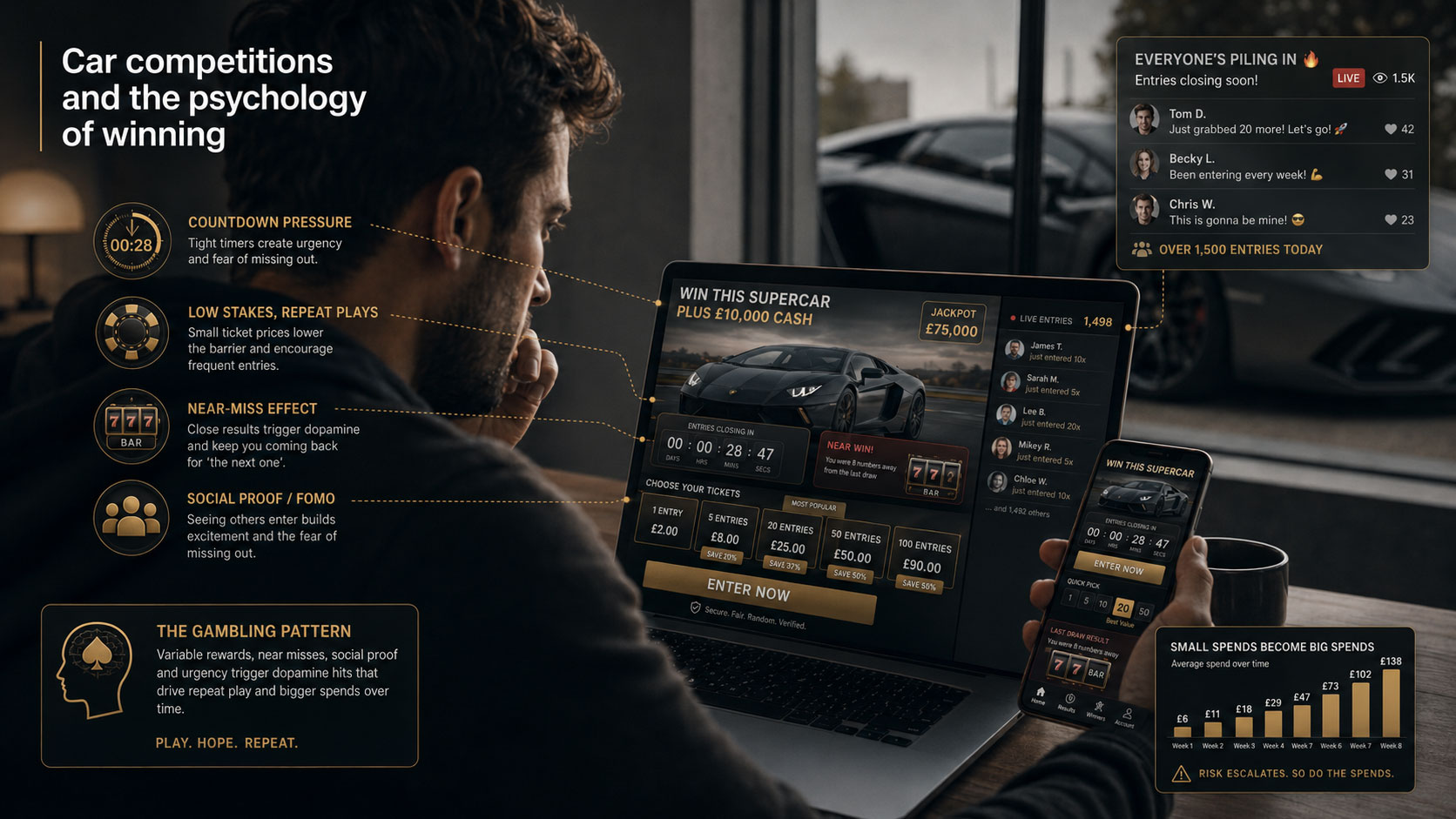
Countdown timers. “Only 12 tickets left.” Instant-win prizes. Flashy banners. VIP deals. Cashback offers. Notifications that pop up just when you were about to forget about it.
These things are not there by accident. They create urgency. They make you feel like you might miss out. They keep the site in your head. It is the same kind of psychology used across the gambling industry, just dressed up with cars, cash and lifestyle marketing.
It’s only a few quid, isn’t it?
This is where it can become easy to underestimate.
Most entries are cheap enough that they do not feel like a big decision. A couple of pounds here. A fiver there. Maybe a few extra tickets because the draw is closing soon.
On their own, those amounts do not seem like much. But over weeks and months, they can quickly add up. A few entries a week can turn into hundreds of pounds a year without you really noticing.
That is part of the appeal. The spending feels small, casual and harmless — until you actually look back and add it together.
Social media makes the whole thing louder
TikTok and Instagram have made these competitions feel even more normal. You see winner videos, luxury cars being delivered, stacks of cash, emotional reactions and people celebrating life-changing prizes.
It is great content, but it is also very effective marketing.
The message is simple: people are winning, and you could be next. That mix of excitement, envy and fear of missing out is powerful, especially for younger audiences who see this kind of content every day.
What you do not see as often are the thousands of people who entered and won nothing.
The pull of the “near miss”
Small wins are another reason people keep coming back.
Maybe you win a voucher. Maybe you get a small instant prize. Maybe you feel like you were close. That can be enough to make you think, “I’ll try again.”
This is not unique to car competitions. It is the same basic principle that makes slot machines so compelling. Occasional, unpredictable rewards keep people engaged because the next win always feels like it might be just around the corner.
The problem is that “almost” can be very convincing, even when it means nothing.
Are these sites doing anything wrong?
In many cases, legally speaking, no.
Plenty of established UK operators follow the rules. They include free postal entry routes, use skill questions, publish terms and conditions, run visible draws and award real prizes to real winners.
So the point is not that every car competition site is a scam. That would be unfair.
The bigger issue is whether something can be legal and still raise uncomfortable questions.
Why people enjoy them
It is also worth being honest about why these sites are popular.
For some people, they are just a bit of fun. A few pounds spent on the chance to win a car they could never normally afford. The odds can sometimes look better than the lottery, and there are genuine winners.
If someone treats it like buying the occasional scratchcard, sets a limit and only spends what they can afford to lose, then it may never become a problem.
The concern is what happens when it stops feeling occasional.
The bigger question
The part regulators and critics are increasingly interested in is this: how much of the industry depends on repeat spending?
Not the person who buys one ticket every now and again, but the person who keeps coming back. The person chasing the feeling of a win. The person who spends more than planned because the draw is closing. The person who does not quite realise how much the habit is costing them.
That is where car competitions start to look less like harmless fun and more like something gambling-adjacent.
Whether that becomes a legal issue is one question. Whether it is an ethical one feels much easier to answer.
Final thought
Car competition sites are not casinos, and it would be too simple to pretend they are exactly the same.
But they do borrow heavily from the same psychological playbook: urgency, small stakes, repeat entries, near misses, instant rewards and the constant feeling that the next one could be yours.
That does not mean nobody should enter them. It just means people should understand what is happening before they do.
Because the excitement is the product. And once you understand that, it becomes much easier to decide whether you really want to click “enter.”