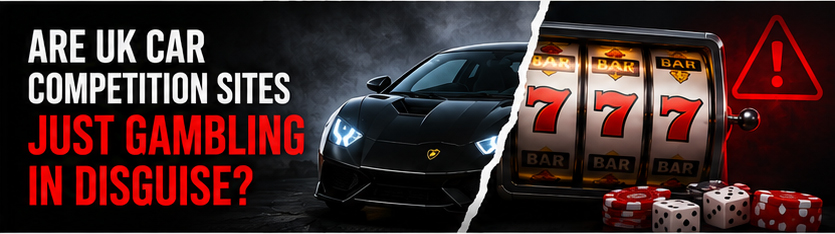
The Debate Around Car Competitions
UK car competition websites market themselves as entertainment platforms offering dream prizes for small entry fees.
Supporters view them as harmless fun with better odds than the lottery.
Critics argue they are simply gambling businesses operating through legal loopholes.
The reality sits somewhere between the two.
Why Critics Compare Them to Gambling
At their core, most competition websites involve:
- risking money
- for a chance at a prize
- based largely on luck
That structure naturally resembles gambling behaviour.
Even though many sites use skill questions, the questions are often so simple they provide little genuine challenge.
Examples include:
- identifying car brands
- answering basic trivia
- selecting obvious multiple-choice answers
Critics argue the “skill” element exists primarily to satisfy legal requirements.
The Psychology Is Extremely Similar
Modern competition websites use many of the same behavioural techniques seen in:
- casinos
- betting apps
- online gaming
Common tactics include:
- countdown timers
- “tickets almost sold out”
- instant win add-ons
- flashing banners
- VIP memberships
- cashback rewards
- frequent push notifications
These systems create urgency and emotional engagement.
Low Entry Prices Reduce Risk Perception
One of the industry’s most powerful strategies is micro-spending.
Consumers rarely feel concerned spending:
- £2
- £5
- £10
But repeated entries accumulate over time.
Someone casually entering competitions several times per week may spend:
- hundreds monthly
- thousands annually
The small transaction size disguises the long-term financial impact.
Social Media Intensifies the Effect
Platforms like TikTok and Instagram amplify the emotional appeal dramatically.
Competition companies flood feeds with:
- luxury cars
- winner reaction videos
- cash giveaways
- aspirational lifestyles
The content is designed to create:
- envy
- excitement
- fear of missing out
This is highly effective marketing psychology.
The Role of Near Misses
Some competition websites use instant-win systems or partial rewards.
Even small wins can reinforce repeat behaviour.
This follows the same psychological principle used in slot machines:
intermittent rewards increase participation frequency.
Users continue entering because:
- they previously won something small
- they feel “close” to winning
- they believe persistence improves chances
Why Regulators Are Watching Closely
As the industry grows, regulatory scrutiny is increasing.
Concerns include:
- gambling-style advertising
- addictive behaviours
- underage exposure
- influencer marketing
- lack of spending safeguards
The line between entertainment and gambling continues to blur.
Are These Sites Actually Illegal?
No — not necessarily.
Most established operators work carefully within UK legal frameworks.
They use:
- free postal routes
- skill-based questions
- transparent draws
- published terms
This helps them avoid lottery classification.
However, legality does not automatically remove ethical concerns.
Why Consumers Defend Them
Supporters argue:
- real people genuinely win
- odds can be better than lotteries
- participation is voluntary
- competitions are entertaining
Many participants treat the experience like:
- buying scratchcards
- entering raffles
- paying for excitement
For casual users with spending discipline, the risks may remain manageable.
The Core Issue
The real concern is not whether the industry is technically legal.
The real question is:
“How much does the business rely on psychologically vulnerable repeat spenders?”
Like many gambling-adjacent industries, profitability depends heavily on frequent participation.
Final Thoughts
UK car competition websites are not traditional casinos.
But they undeniably use many of the same psychological systems that drive gambling engagement.
For consumers, understanding these behavioural mechanics is essential.
Because once emotion overrides probability, spending decisions become far less rational.