You’ve probably seen the videos.
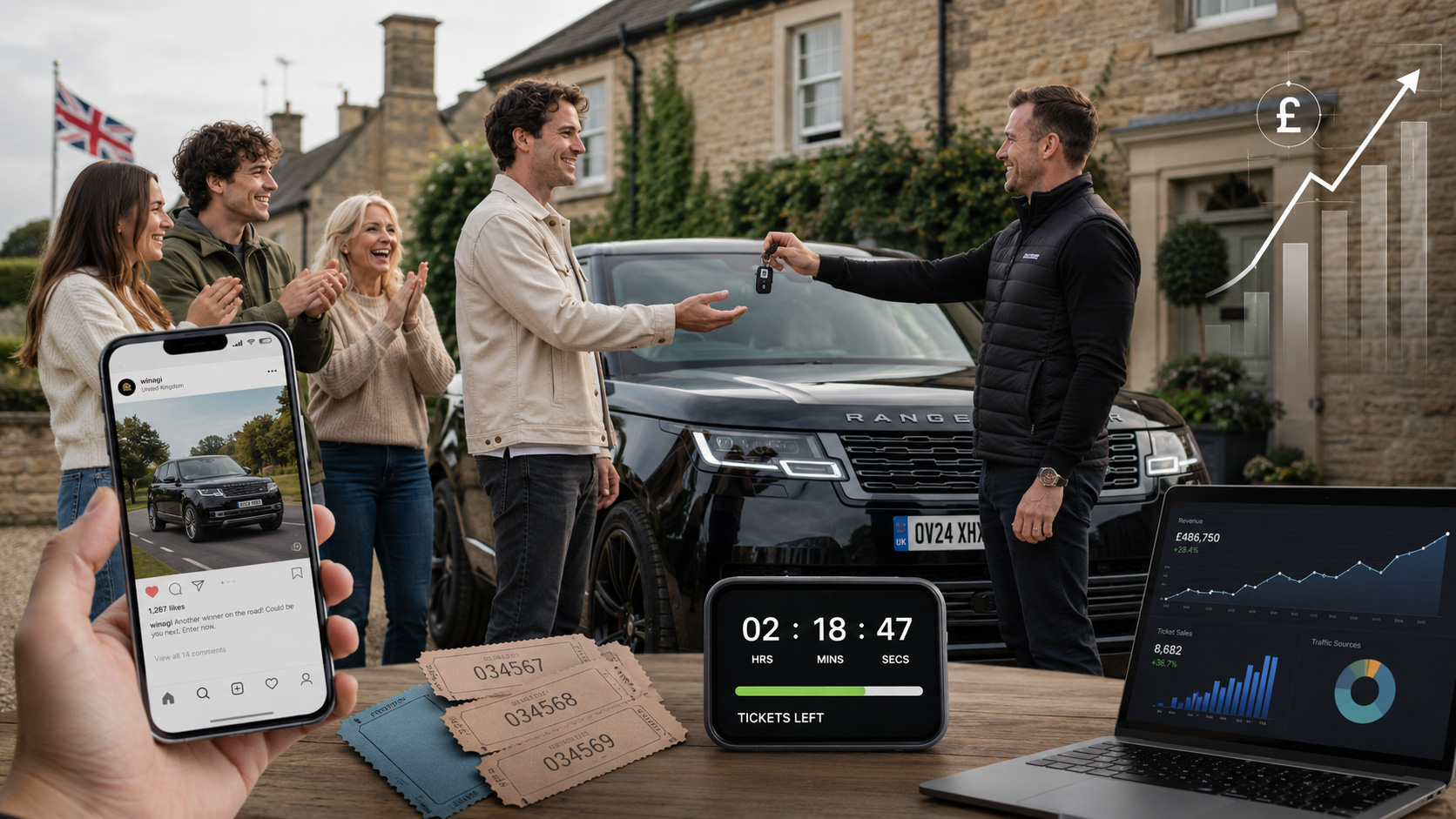
Someone standing on their driveway, completely speechless, while a brand-new Range Rover gets rolled off a trailer. Keys handed over. Family screaming. Maybe a few tears. Then the caption tells you they won it from a £2.99 ticket.
And naturally, your first thought is: how does that even work?
Because from the outside, it looks ridiculous. How can a company give away a £70,000 car, a BMW M4, or even £100,000 in cash, while charging people just a few pounds to enter?
The answer is fairly simple: they sell a lot of tickets, they understand attention, and they’re very good at turning excitement into revenue.
At the heart of it, the maths is straightforward.
Say a company gives away a £50,000 prize. They charge £5 per ticket and cap the draw at 25,000 entries. If it sells out, that’s £125,000 in revenue.
From that, they still need to pay for the prize, advertising, payment fees, staff, tax, website costs, and everything else that comes with running the business. But when the numbers are right, there’s still plenty of margin left.
That’s the key point: the model only really works at scale. But when it does scale, it can work very well.
Social media has made that possible in a way that simply didn’t exist before.
Years ago, getting in front of thousands of potential customers was expensive. Now, one good TikTok or Instagram Reel can put a competition in front of a huge audience overnight. These companies know exactly how to package the dream: fast cars, shocked winners, low ticket prices, countdown timers, and a sense that anyone could be next.
They’re not just selling entries. They’re selling a moment.
That’s why the winner videos matter so much.
On the surface, they look like feel-good content. And they are. But they’re also some of the most effective advertising these businesses have. A real person winning a real car is far more convincing than any polished advert.
It gives people proof. It creates emotion. It makes the whole thing feel possible.
Every handover video says the same thing without needing to say it directly: this could be you.
Another big part of the model is repeat customers.
Someone buying one ticket once is useful, but the real value comes from people who come back again and again. That’s why so many competition sites now have loyalty points, account credit, bonus entries, VIP levels, app notifications, and subscriber perks.
Those features aren’t random. They’re designed to make entering feel easy, rewarding, and habitual.
In many cases, a smaller group of regular players will generate a large share of the revenue. It’s not that different from gaming apps, betting platforms, or subscription businesses. The first sale matters, but the repeat behaviour is where the real money is.
There’s also a reason cars are used so heavily.
Cash is practical, but it doesn’t create the same reaction online. A Lamborghini, Range Rover, or Porsche is visual. It photographs well. It looks good in thumbnails. It gets people to stop scrolling.
A bank transfer might change someone’s life, but handing over the keys to a £90,000 car creates a much bigger social media moment.
That matters because attention is the fuel behind the whole business.
Then there’s urgency.
Most competition sites are full of phrases like “ends tonight”, “final few tickets”, “lowest odds”, or “only 10 entries left”. That kind of messaging works because it pushes people to make a decision quickly.
Scarcity is powerful. When people feel like they might miss out, they’re more likely to act there and then rather than think about it for too long.
It can be very effective — sometimes uncomfortably effective.
More recently, a lot of these businesses have also started moving towards subscription-style models. Instead of relying only on one-off ticket sales, they offer monthly memberships with automatic entries, exclusive draws, or VIP competitions.
From a business point of view, that makes sense. One-off sales are unpredictable. Recurring revenue is much easier to plan around.
The surprising part is that the prize itself often isn’t the biggest challenge.
Most people assume the car is the main cost. In reality, advertising can be the biggest expense. Facebook ads, Instagram campaigns, TikTok content, influencer deals, retargeting, video production — getting people onto the site and convincing them to buy is where a lot of the money goes.
The car is the headline. The marketing machine behind it is the business.
So, what are these companies really?
They’re not just raffle businesses. They’re digital marketing companies built around prizes.
The car gets your attention. The winner video builds trust. The low ticket price lowers the barrier. The countdown creates urgency. The loyalty system keeps people coming back.
It might look like a simple giveaway from the outside, but behind the scenes it’s a carefully designed model built on volume, psychology, content, and repeat spending.
The prize is what stops your thumb mid-scroll.
Everything else is what turns that attention into money.